
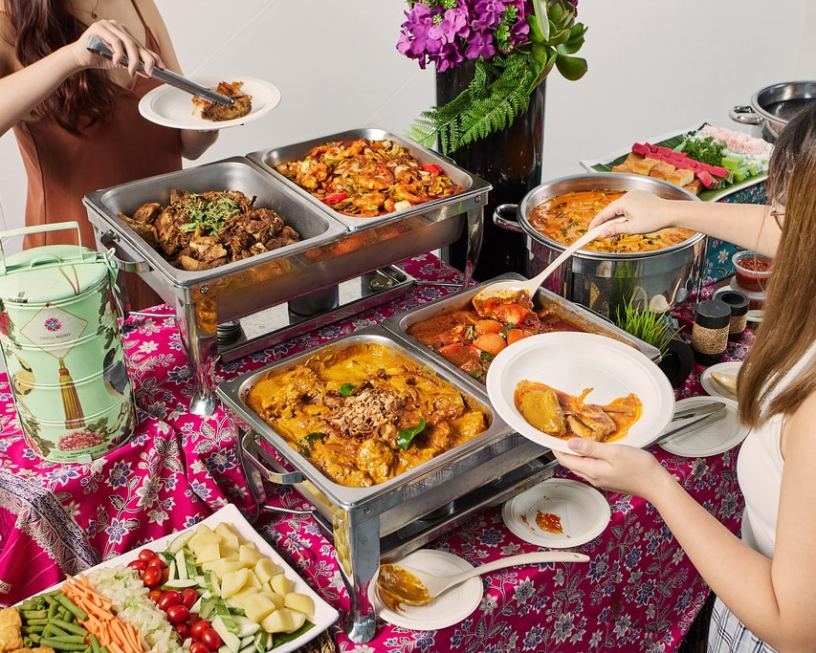
Draw a circle on a sheet of paper. That is one guest’s plate. Before reading a single menu, decide what should sit on it: something filling, something with protein, something green, something crisp, and room at the edge for a sweet. Planning the food for a small event is mostly a matter of filling that circle sensibly and multiplying. For anyone arranging a halal mini buffet singapore order for the first time, the drawn plate is a better guide than any list of best-selling dishes.
The Staple Sets the Tone
Half the plate is rice or noodles, so choose it first. Plain or lightly flavoured rice is the neutral option: it suits gravies, pleases elders and offends nobody. Fried rice or fried noodles stand on their own and work when guests will eat standing. Taking both is possible on larger sets but, for a group of twelve to twenty, one staple done properly is enough.
One Dish With Gravy, One Without
Next come the main proteins, usually two. Pair a wet dish with a dry one. A curry or a braise brings sauce to the rice. A roasted, grilled or dry-fried item gives contrast and is easier for children. If both mains are saucy the plate turns to soup. If both are dry the meal feels heavy by the third mouthful. Vary the meat as well, chicken with fish or beef, so that someone avoiding one still has a full portion of the other.
The Vegetable Is Not an Afterthought
A tray of mixed vegetables is often chosen in two seconds and regretted. It is the only dish some guests can eat, including vegetarians and those watching their diet, so pick one with substance: beans, broccoli, beancurd or mushrooms, not only cabbage. Check with the caterer whether it is cooked with dried shrimp, oyster sauce or meat stock, since that matters to vegetarians and to anyone with a shellfish allergy.
Something to Pick Up With Fingers
The fourth slot is the snack: a spring roll, a curry puff, a samosa, a fried wanton. It serves early arrivals before the meal starts and children who will not sit. It also disappears fastest, so if the set allows one item in a larger quantity, choose this. When comparing set menus with a choice of dishes, notice which caterers count the finger food as a full course and which add it as an extra, because that changes how much real food the stated price buys.
Sweet, Cold and Simple
Dessert on a small buffet should need no cutting, no plates of its own and no refrigeration you do not have. Bite-sized kueh, a chilled jelly in cups or cut fruit all qualify. A whole cake does not, unless it is the birthday cake and someone is assigned to slice it. Think about the weather and the room. In a warm community hall, cream melts and chocolate sweats. A firm, room-temperature sweet will look the same at the end as at the start.
Drinks and the Things People Forget
Decide early whether drinks come with the set or from the supermarket. A dispenser of cordial or iced tea is convenient but needs a table edge and cups. Cartons and bottles are cheaper and create more rubbish. Then list the unglamorous items: serving spoons for each tray, spare plates for second helpings, tissues, bin bags, a cloth for spills. None of these is food, and their absence is what guests remember.
Adjusting for the People in the Room
Now test the plan against your guest list. Confirm that the caterer holds current Muis certification, since that is the basis on which Muslim guests will eat at all. Then check individuals. Is the curry mild enough for grandparents? Is there a second option for the cousin who does not take beef? Would a nut-free dessert be wiser with small children present? Change one dish at a time.
Multiplying the Plate
With six or seven items chosen, turn to quantity. Caterers size sets by headcount, with a minimum order, and assume each person takes a moderate serving of everything. Use the stated number for a normal lunch. Go up by a few heads for an evening event, a celebration or a young crowd. Go no lower than the true count to save money, because the first shortage is always rice. When unsure, ask the caterer how many pieces or how large a serving the set allows per person.
A Timetable on the Same Sheet
On the back of the paper, write four times. When the order must be placed, which may be several days ahead. The delivery window, with a named person to receive it. The serving time, as soon after arrival as practical. And the consume-by time printed on the caterer’s label, after which leftovers are thrown away. If the gap between delivery and serving is more than an hour on your plan, move one of them.
From Sketch to Order
You should now have a circle with five or six words in it, a short list of extras, a headcount and four times. That single sheet is the whole plan. Take it to a menu page and look for the set that matches it most closely instead of letting the menu rewrite it. Where a set differs by one dish, ask about a substitution. If it differs by three, look elsewhere. Starting from halal buffet trays for small events, most hosts find a fit within two or three options.

