
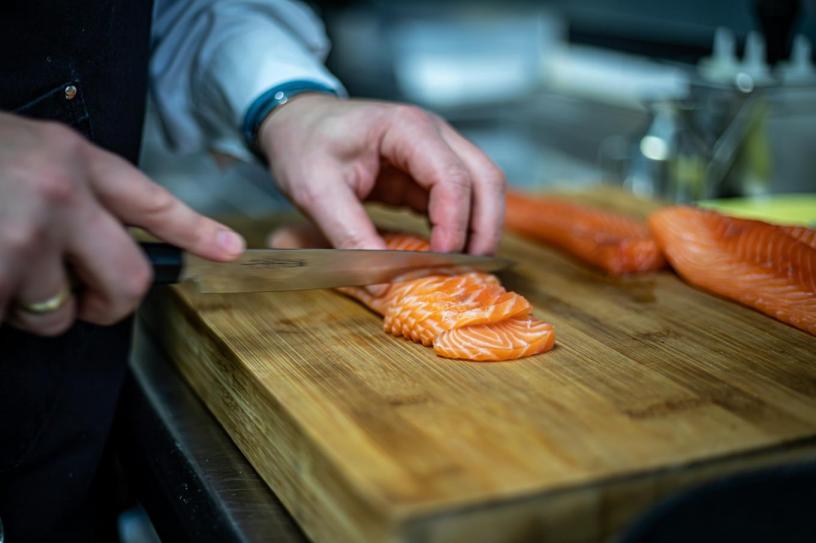
Singapore’s appetite for raw fish shows up everywhere, from hawker-adjacent sushi counters to omakase bars that book out weeks ahead, and increasingly in home kitchens where diners want the same quality without a reservation. Finding sashimi worth eating raw has less to do with a restaurant’s decor and more to do with what happens to the fish long before it reaches a plate. The gap between a forgettable slice of tuna and one that actually tastes like the ocean comes down to species, handling, and the number of hours between catch and cut. Japanese seafood culture has taken root deeply enough here that diners now expect the same standards at a neighborhood sushi-ya that they’d expect in Tokyo, which puts real pressure on suppliers to match that bar rather than cut corners on a category where mistakes are obvious the moment the fish hits the tongue.
What Sashimi-Grade Actually Means
There is no single legal standard in Singapore that defines “sashimi-grade,” which is exactly why the term gets used loosely by anyone selling fish. In practice, the phrase should signal that a specific species was handled in a way that makes it safe to eat raw: bled and chilled immediately after capture, kept at consistent near-freezing temperatures, and in many cases blast-frozen at very low temperatures to neutralize parasites before it ever reaches a kitchen. Tuna, salmon, and certain snapper and amberjack species are commonly sold this way, but the label only means something when the supplier can explain their handling process rather than simply printing the words on a sticker.
The Cold Chain Behind Every Cut
Fish destined for sashimi travels through a chain of custody that starts at the water and doesn’t really end until it’s on a plate. A tuna caught off Japan or Sri Lanka, for example, might be flown into Changi within a day or two of landing, moved through a temperature-controlled cargo terminal, and transferred to a distributor’s chiller without ever sitting at ambient temperature. Any break in that chain, a delayed pickup, a warm loading dock, a fridge that cycles too high, shortens shelf life and increases risk long before a home cook or chef even touches the fish. This is why serious seafood retailers talk about logistics almost as much as they talk about flavor.
Wet Markets Versus Specialty Importers
Wet markets remain a legitimate source for general seafood, but they were built around cooking fish, not eating it raw, and the cold chain at a typical stall wasn’t designed with sashimi handling in mind. Supermarkets occupy a middle ground: convenient, often pre-packaged, but with variable turnover that means a fillet labelled sashimi-grade might have sat in a display case longer than ideal. Specialty importers and dedicated seafood retailers tend to be the more reliable route because their entire business depends on maintaining an unbroken cold chain and sourcing directly from fisheries or auction markets that grade fish specifically for raw consumption, rather than treating that as a secondary use case.
Reading a Fishmonger’s Sourcing Practices
A useful habit before buying any fish for sashimi is asking where it actually came from and how recently. A supplier that can name the fishing region, the flight or shipment schedule, and the storage temperature is one that has thought about the whole journey, not just the sale. Businesses built around this category, including online-first retailers such as Soshinsen, tend to publish more detail about sourcing than a general grocer would, partly because their customers are specifically looking for raw-eating quality and will notice if the fish falls short. That transparency is a reasonable proxy for care taken earlier in the chain, even before you get the fish home. Fish grading is another piece worth understanding, since even within a single species like bluefin tuna, cuts vary enormously in fat content and texture, and a supplier who can explain the difference between an otoro-style belly cut and a leaner loin section is one who actually understands the product rather than reselling whatever arrived that week.
Ordering Sashimi for Home Dining
Home sashimi has become more common in Singapore over the past few years, partly driven by smaller households wanting restaurant-quality meals without the markup, and partly by a broader interest in Japanese seafood culture beyond just sushi rolls. Ordering online for home dining works differently from picking fish off a counter: you’re relying on someone else’s judgement at the point of cutting and packing, which puts even more weight on the supplier’s reputation and process. Portion sizes matter here too, since sashimi cuts sold for home use are often pre-portioned and vacuum-sealed or chilled in insulated packaging designed to survive a delivery window rather than an immediate sale.
Storing and Serving Sashimi Safely at Home
Once sashimi-grade fish arrives at home, timing becomes the main variable a cook controls directly. Fish meant to be eaten raw should go into the coldest part of the refrigerator immediately, ideally not the door, and be consumed within the window the supplier recommends rather than treated like a standard fillet that can wait a few extra days. A sharp knife matters more than people expect: dragging a dull blade through delicate flesh tears the texture in a way that changes both mouthfeel and how the fish presents on a plate. Serving temperature also plays a role, since sashimi tastes noticeably different straight from the fridge compared to fish that’s been allowed to sit for ten or fifteen minutes and lose that initial chill.
Quality sashimi in Singapore isn’t confined to any one type of venue anymore. It shows up in high-end restaurants, in casual izakaya-style spots, and increasingly in home kitchens supplied by importers who treat cold chain logistics as the actual product, not an afterthought. The consistent thread across all of them is traceability: knowing where the fish came from, how it was handled, and how much time passed before it reached a cutting board. A twelve-course omakase menu and a simple platter shared at home on a weeknight both depend on that same standard, and it’s the one detail a diner can actually verify before the first bite.

