
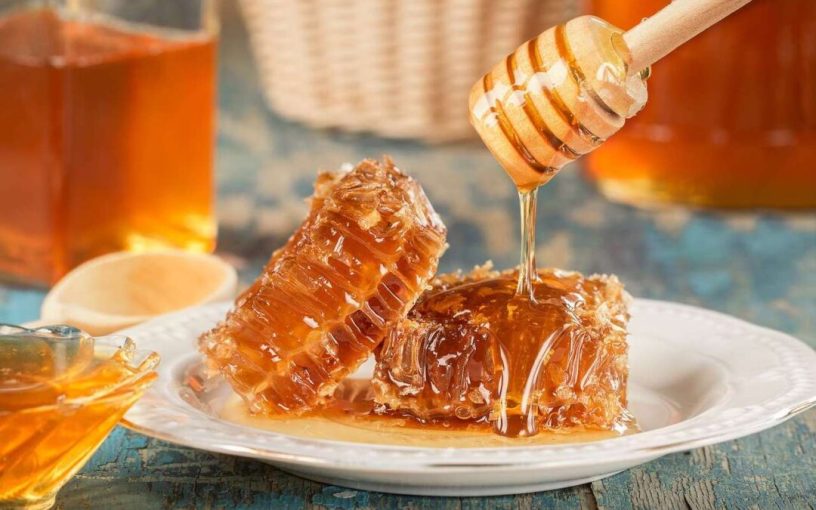
Most kitchens treat sweeteners like simple switches—add a spoon, get sweetness, move on. But some ingredients refuse to behave like that. They carry history, biology, and character inside them. Unfiltered, unheated honey is one of those rare ingredients. Handle it carelessly and it behaves like sugar; handle it thoughtfully and it becomes something far more interesting.
1. Respect the Biology: Why Heat Changes Everything
Most kitchens overlook the fact that Raw Honey is not just a sweet liquid. It’s a living food system. Inside that golden jar are delicate enzymes, traces of pollen, plant compounds, and natural antioxidants. These elements are part of what makes this nectar from the hive fundamentally different from supermarket sweeteners that have been pasteurized and stripped down to basic sugars.
But here’s the catch—those biological elements are fragile.
Once temperatures climb beyond roughly 40–45°C (104–113°F), many of these compounds begin to weaken or disappear. Heat doesn’t make the ingredient unsafe, but it does quietly erase the very qualities that make it special.
So experienced cooks approach it with a slightly different mindset. Instead of treating it like an ingredient that belongs at the start of a recipe, they think of it as something that belongs toward the end of the process.
You’ll see professionals adopt habits like:
- Avoid stirring hive-sourced honey into boiling liquids
- Skip adding it during early cooking stages
- Treat it as a finishing element rather than a cooking base
This small shift changes the kitchen philosophy entirely. The goal stops being “sweeten the dish” and becomes preserve the ingredient’s living character.
2. The “Add Last” Strategy: Small Timing, Big Impact
One of the smartest adjustments a cook can make when working with natural honey is incredibly simple: add it last.
Think about how people usually sweeten tea or oatmeal. They stir it in immediately while everything is piping hot. That habit is convenient—but it also exposes the ingredient to unnecessary heat.
Professionals approach it differently.
They allow the dish to cool slightly first. Once the temperature drops to something comfortable to eat, the honey goes in.
Such a subtle shift in timing does several things at once:
- Protects delicate enzymes still present in the honey
- Preserves the complex floral aromas from the hive
- Prevents excessive caramelized sweetness
In practice, the difference is noticeable.
Critical integrative culinary techniques for potency preservation include:
- Stir a spoonful into warm herbal tea after steeping
- Mix it into oatmeal once it leaves the stove
- Drizzle it lightly over roasted vegetables just before serving
Even soups and sauces can benefit from this approach. Rather than cooking the sweetener into the base, chefs whisk it in at the final moment.
For businesses creating health-focused menus or natural food products, this simple timing technique can become a distinctive quality marker.
3. Where It Truly Shines: No-Heat Culinary Creativity
Ask seasoned chefs where hive-harvested honey really proves its worth, and many will say the same thing: in dishes that never see the stove. Cold preparations protect both flavor and nutritional depth. They also allow the ingredient’s floral complexity to stand out.
A few places where it performs beautifully:
Cold emulsions and dressings
- Because of its natural viscosity, this golden sweetener helps bind oil and acids together.
- Simple pairings can create elegant dressings: Olive oil + apple cider vinegar + honey + mustard. Also, lemon juice + tahini + honey + garlic.
That way, honey’s natural compounds blend ingredients that do not naturally mix (like oil and water) to create a smooth, stable, and creamy emulsion, without adding commercial stabilizers.
Finishing Touches
Professional chefs treat honey more like a garnish rather than a bulk ingredient.
Examples include:
- A drizzle over yogurt and fresh berries
- Pairing it with aged cheeses on charcuterie boards
- Brushing it lightly over roasted carrots or squash
These finishing touches add contrast—sweetness against acidity, creaminess, or salt.
Cold Nutritional Blends
Because it dissolves easily, honey integrates well into wellness-focused recipes:
- Boosting energy and masking bitterness in smoothies
- A natural sweetener and binder in overnight oats
- Creating potent, nutrient-dense health remedies with chilled herbal tonics
In these contexts, it becomes a bridge between taste and nourishment.
4. Baking with Honey: The Soft Side of Honey
Now let’s talk about where honey works with heat; because it is unavoidable: baking. Once honey enters the oven, temperatures inevitably change its delicate structure. Still, raw honey continue to bring other qualities refined sugar simply cannot offer.
Functional pastry outcomes of strategic honey integration include::
- Deeper caramel flavor
- Excellent moisture retention
- Mild preservative properties
These characteristics help baked goods stay soft longer and develop richer flavor.
But using it correctly requires a few adjustments. Experienced bakers typically follow these rules:
- Substitute ¾ cup of honey for every 1 cup of sugar
- Reduce other liquids by about ¼ cup
- Lower the oven temperature by around 25°F (15°C)
Why lower the heat? Because honey contains higher levels of fructose, which causes it to brown faster. As such tuning temperatures prevent the surface from burning before the interior finishes baking.
These wisdom tweaks allow bakers to harness its flavor without compromising the final result.
5. Crystallization: A Natural Transformation
Many people when they spot their honey turn grainy or solid, they assume it has gone bad; when in reality, the granular state indicates it is raw, pure, and unpasteurized. A sign of authenticity.
Unprocessed honey contains microscopic particles—pollen grains, bits of wax—that act as natural catalysts for glucose crystals to form. Cooler storage temperatures accelerate this process. Rather than viewing it as spoilage, experienced cooks simply treat it as a reversible change. The solution is gentle warming.
The best method is surprisingly simple:
- Place the jar in a bowl of warm water
- Stir occasionally as the crystals dissolve
What should you avoid?
X Microwaving the jar
X Boiling the honey directly
Both approaches expose the ingredient to unnecessary heat and erase the biological qualities many people value. By handling it “patiently” (using a low-temperature water bath rather than a microwave or direct flame), you are applying reversibility and structural integrity principle to restore silky texture without losing its character.
In essence, cooking with honey from the hive is less about sweetness and more about respect. When you understand how temperature, timing, and preparation shape its behavior, the ingredient reveals far greater potential than refined sugar ever could. Skilled cooks don’t force ingredients to behave—they learn their nature and build recipes around it.

